
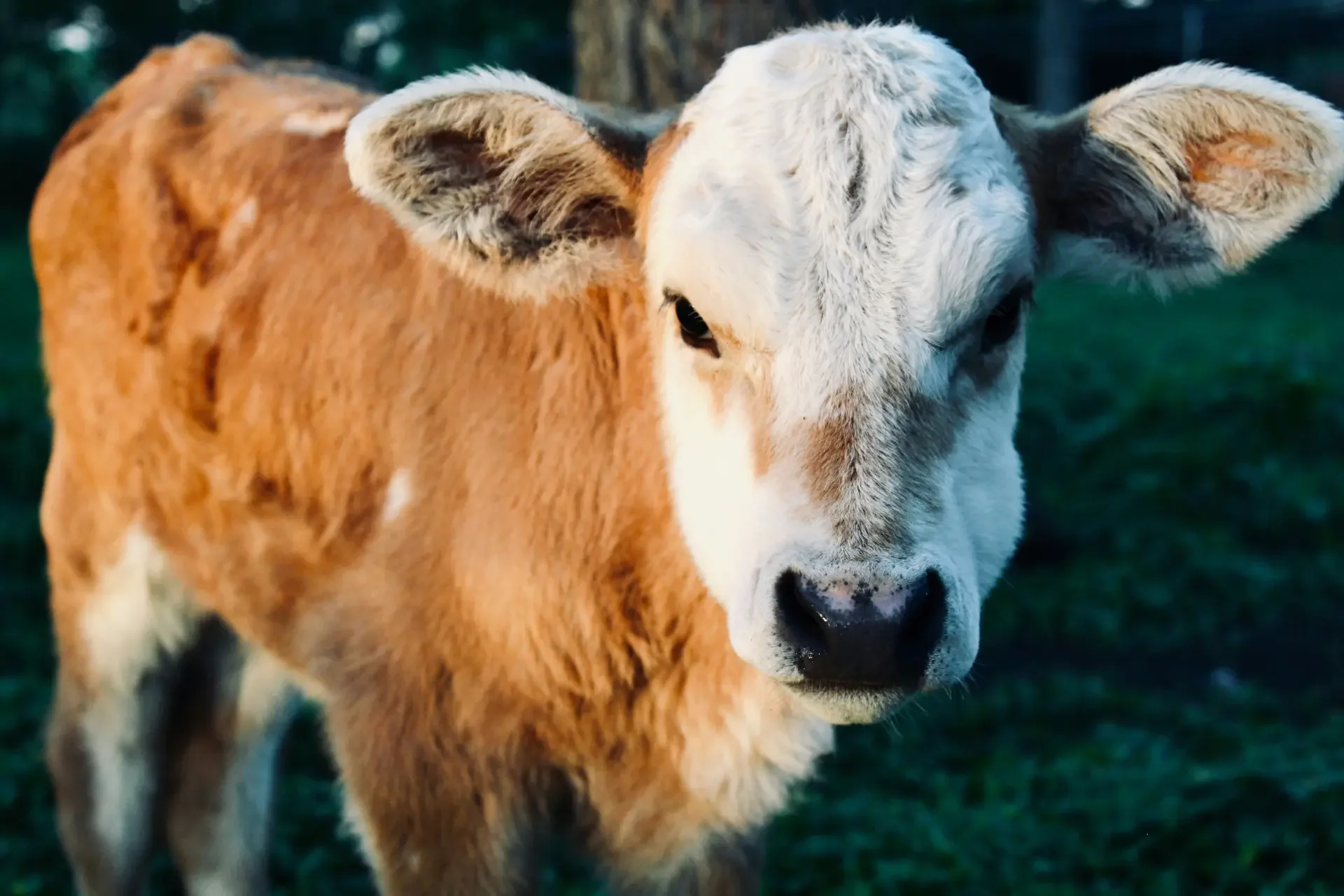
Motherhood in Dairy
Photo credits: Unsplash
Maternal Behavior in Cattle: The Science Behind the Industry's Most Persistent Myth
Cattle experience genuine maternal instincts backed by neuroscience and genetics. Learn why the dairy industry separates mothers and calves—and what the latest research reveals about the consequences.
Contents:
What Happens in the First Five Minutes
The Economics Behind the Practice
What Science Shows About Separation Trauma
The “Bad Mother” Myth
What Sanctuaries Teach Us
Why This Matters
What You Can Do
Sources & References
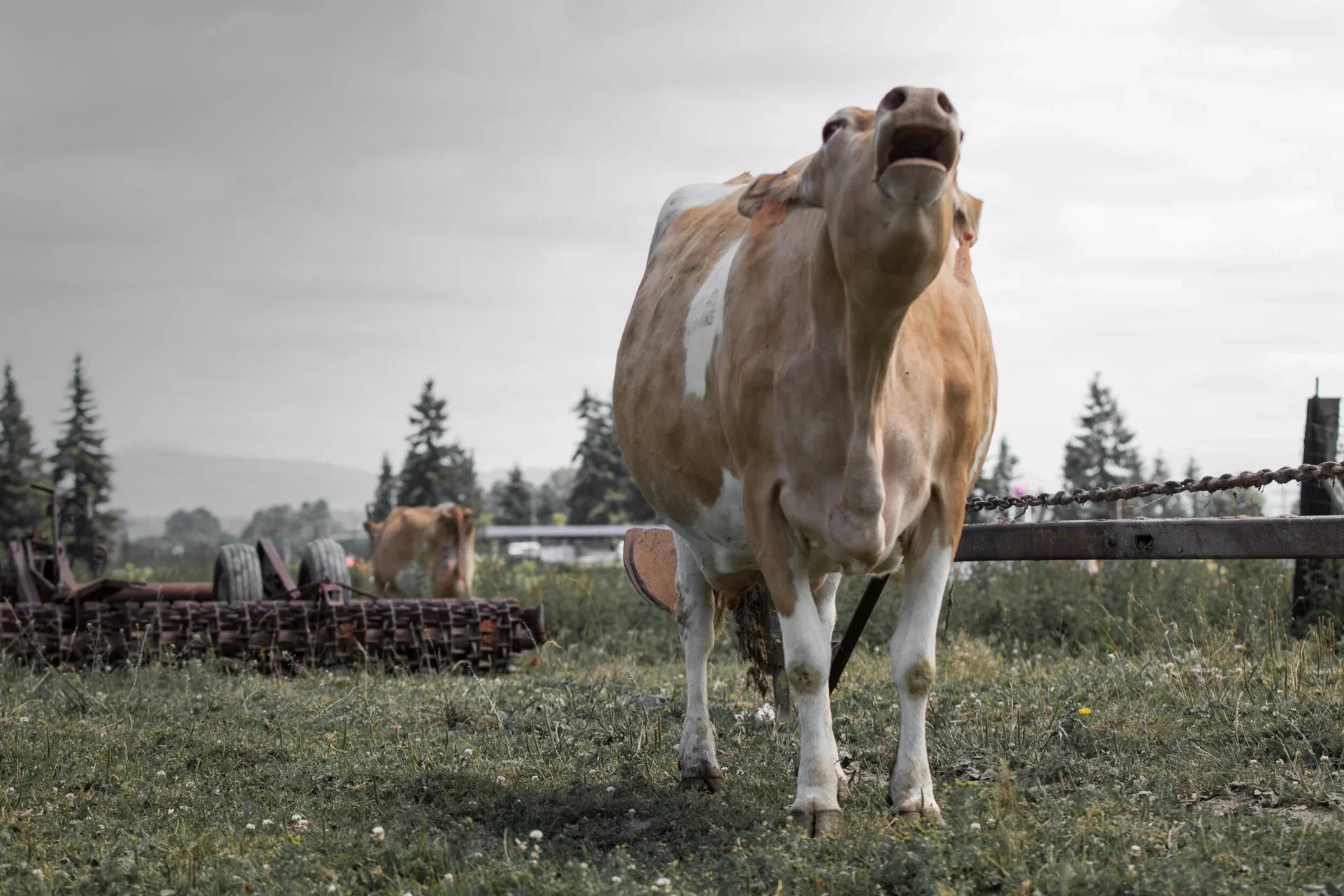
A mother bellows for her baby. Photo credit: Unparalleled Suffering
At Edgar's Mission in Australia, a cow named Clarabelle who'd been rescued from a dairy farm gave birth to a calf.[6] For three days, staff couldn't find the newborn anywhere.
They searched the entire property. Nothing.
On day four, they discovered why. Clarabelle had hidden her calf in the densest thicket on the property, checking on him only when she thought no one was watching. She would nurse him quickly, then walk away as if nothing had happened.
This wasn't instinct gone wrong. It was instinct shaped by trauma.
Clarabelle had given birth four times before in the dairy system. Each time, within 24 hours, humans took her calf away. She remembered. So when she gave birth at the sanctuary, she did the only thing that made sense: she hid her baby from the people who might take him.
The dairy industry has spent decades promoting a simple narrative: cows don't really need their calves. They're not naturally maternal. Early separation is actually better for everyone. It prevents stress, improves health, makes the system work.
Science tells a completely different story.
What Happens in the First Five Minutes
Here's something the dairy industry doesn't advertise: a mother cow bonds with her calf in roughly five minutes.
Not five hours. Not five days. Five minutes.
Research published in Frontiers in Veterinary Science documents exactly how this happens.[1] The moment a calf is born, the mother's brain floods with oxytocin (the same hormone that creates bonding in human mothers). She starts licking the calf immediately. This isn't just affection. The licking serves multiple survival functions: it clears the airways, dries the coat to prevent heat loss, and stimulates the calf to stand and nurse.
But here's the critical part: during those first minutes of licking and sniffing, the mother learns her calf's unique scent, appearance, and sound. She's not bonding with "a calf." She's bonding with this specific calf.
Once that bond forms, it doesn't go away.
Studies show that mothers separated from their calves continue searching and calling for them for days, sometimes weeks.[2] Their distress calls are measurable and distinct from other vocalizations. These aren't generic moos. They're the sound of a mother looking for her missing child.
The industry's claim that early separation “prevents bonding and therefore prevents stress" is backwards. The bond forms almost immediately. Separation doesn't prevent stress. It creates it.
The Economics Behind the Practice
So why does the dairy industry separate calves from their mothers within 24 hours of birth?
The answer has nothing to do with animal wellbeing and everything to do with milk.
Cows used for dairy production make the most milk in the first 60 to 90 days after giving birth. This is peak lactation, when her body is working overtime to feed her calf. If the calf is nursing during this period, it drinks roughly one to two gallons of milk per day.
The farmer will earn more money selling that milk than selling the calf.
A newborn male calf from a dairy breed might sell for $100 to $300, sometimes less. The milk that the calf would drink over the course of nursing (which naturally lasts 8 to 11 months) represents hundreds of gallons that could be sold instead. From a purely economic standpoint, the calculation is simple: selling the milk generates more revenue than keeping the calf with its mother.
The exact numbers vary by milk prices and calf size, but the economic logic is consistent across the industry. The calf's presence reduces the milk available for sale. Removing the calf maximizes the milk the farmer can extract and sell.
But here's what the industry doesn't mention: this calculation treats the calf as a cost, not as an individual with needs. It treats milk as a commodity to extract, not as nutrition meant for a baby.
The system is designed around a simple premise: maximize milk extraction during peak lactation by removing the calf immediately.
That's it. That's the reason.
A mother bellows for her baby. Photo credit: Unparalleled Suffering
What Science Shows About Separation Trauma
When a calf is taken from its mother, both animals experience measurable, documented stress.
The mother's response:
Intense vocalization that can last for days
Searching behavior (pacing, checking doorways, looking for the calf)
Elevated cortisol (the primary stress hormone)
Disrupted milk letdown (stress interferes with oxytocin release)
Increased risk of mastitis and reproductive infections in the weeks following separation
The calf's response:
High-pitched distress calls that can continue for a week
Searching for the mother
Reduced food intake immediately after separation
Elevated cortisol and suppressed immune function
Behavioral changes that can persist into adulthood
A 2019 review in the Journal of Dairy Science examined decades of research on cow-calf separation.[3] The conclusion was unambiguous: there is no health-based evidence supporting the necessity of early separation. The practice persists because it's economically convenient, not because it's better for the animals.
Research comparing different separation methods shows something striking. Calves who stay with their mothers for 8 to 12 weeks and then undergo gradual weaning show minimal stress responses. Their cortisol barely rises. They vocalize for maybe a day or two. They continue eating normally.
Calves separated at 24 hours show severe, prolonged stress responses.
The difference isn't whether separation happens. It's when and how it happens.
A Telling Development
Some farms in Europe have started implementing extended cow-calf contact systems, allowing mothers and calves to stay together for weeks or months instead of hours.[4]
Why?
Because the research on separation trauma became impossible to ignore. Even within the industry, there's growing awareness that standard practices cause unnecessary suffering. These modified systems still involve forced pregnancy, eventual separation, and slaughter. They're not ethical dairy. But their existence proves something important:
The industry has always known that immediate separation harms both mother and calf. They chose profit over welfare anyway.
The “Bad Mother” Myth
The dairy industry has long maintained that cows used for high milk production aren't naturally maternal. They point to behaviors observed in commercial farms: cows who seem indifferent to their calves, cows who nurse the wrong calf, cows who appear restless and anxious around birth.
But these behaviors don't reveal a lack of maternal instinct. They reveal an environment that prevents maternal behavior from being expressed.
Consider what happens in a typical dairy calving area:
High stocking density (multiple pregnant cows in a confined space)
No privacy for giving birth
Exposure to the birth fluids of other cows (creating olfactory confusion about which calf is hers)
No ability to isolate and nest before birth
Constant human disturbance
Research on feral and sanctuary cattle shows that when cows are given space, privacy, and freedom from interference, they behave like competent mothers.[5] They isolate before birth. They bond immediately with their calves. They nurse successfully. They protect their young from threats. They maintain relationships with their calves even after weaning.
The “bad mother” narrative exists to justify a practice that benefits profit margins, not animal wellbeing.
What Sanctuaries Teach Us
Back at Edgar's Mission, Clarabelle's story had a different ending than her previous calves.
After three days of hiding her baby, she finally allowed staff to approach. She watched carefully as they checked on the calf, ready to intervene if needed. Slowly, she learned that these humans were different. They weren't going to take her baby away.
She stopped hiding him. She nursed openly. She taught him to graze. She played with him in the pasture, running alongside him as he kicked and bucked.
She mothered him the way she'd been prevented from mothering her other four calves.
At sanctuaries across the country, this pattern repeats. Cows rescued from dairy farms who give birth for the first time in safety often hide their calves initially. It's learned behavior from years in the system. But given time and safety, they reveal what the industry denies: they're devoted mothers.
They form specific, lasting bonds with their calves. They grieve when separated. They celebrate reunion. They teach, protect, and nurture. They do everything mothers in any species do when given the chance.
The evidence isn't just in peer-reviewed journals. It's visible in every pasture where a mother and calf are allowed to stay together.
Why This Matters
Every glass of milk comes from a cow who experienced what Clarabelle experienced. Pregnancy, birth, bonding, and then separation. The removal of a calf she was biologically programmed to protect and nurture.
This happens not once but repeatedly throughout her life. Cows in dairy systems are kept in a continuous cycle of pregnancy and lactation. Every year, a new pregnancy. Every year, a new calf. Every year, a new separation.
By the time a cow used for dairy is four to six years old (having given birth four to six times), her body is exhausted. She's slaughtered for low-grade beef. Her natural lifespan would be 20 years. She gets a quarter of that.
The dairy industry functions on the premise that this is necessary, normal, and humane. The science shows otherwise.
Maternal behavior in cows is genuine, deeply motivated, and biologically grounded. Separation causes measurable suffering.
The gap between what we know and what we practice is vast.
What You Can Do
Every time you choose a plant-based milk instead of dairy, you're refusing to participate in this system. You're making a choice based on evidence rather than marketing.
Practical steps:
1.
2.
3.
4.
Try plant-based alternatives
Oat milk, soy milk, almond milk, and cashew milk are widely available and nutritionally comparable to dairy milk. Most coffee shops now offer them as standard options. Many people find they prefer the taste once they make the switch.
Learn more about the dairy system
The more you understand how milk production actually works (not how it's marketed), the easier it becomes to make choices that align with your values. We have additional resources on our website about the realities of commercial dairy production.
Support animal sanctuaries
Organizations like Edgar's Mission, Poplar Spring Animal Sanctuary, Farm Sanctuary, and local rescues provide care for cows who've been rescued from dairy farms. Your donations help fund their ongoing care and allow these animals to live out their lives in peace.
Share what you've learned
Most people genuinely don't know what happens in dairy production. The industry's marketing is incredibly effective at hiding the reality of mother-calf separation. Conversations with friends, family, and coworkers matter. Share this article. Talk about what you've learned. Help others see past the marketing.
The science is clear. The ethics follow from understanding that science. The choice is yours.
-
[1] Orihuela, A., Huitrón-Bravo, G., & Flores-Peinado, S. C. (2021). Dairy-specific maternal bonding in cattle. Applied Animal Behaviour Science, 235, 105198. https://doi.org/10.1016/j.applanim.2020.105198
[2] Marchant-Forde, J. N., Marchant-Forde, R. M., & Weary, D. M. (2002). Responses of dairy cows and calves to each other's vocalizations after separation. Applied Animal Behaviour Science, 78(1), 19-28. https://doi.org/10.1016/S0168-1591(02)00082-5
[3] Beaver, A., Meagher, R. K., von Keyserlingk, M. A. G., & Weary, D. M. (2019). A systematic review of the effects of early separation on dairy cow and calf health. Journal of Dairy Science, 102(7), 5784-5810. https://doi.org/10.3168/jds.2018-15603
[4] Bertelsen, M., Jensen, M. B., & Larsen, T. (2023). Shaping cow-calf contact systems: Farmers' motivations and considerations behind a range of different cow-calf contact systems. Journal of Dairy Science, 106(11), 7769-7785. https://doi.org/10.3168/jds.2022-23148
[5] Rørvang, M. V., Nielsen, B. L., Herskin, M. S., & Jensen, M. B. (2018). Prepartum maternal behavior of domesticated cattle: A comparison with managed, feral, and wild ungulates. Frontiers in Veterinary Science, 5, 45. https://doi.org/10.3389/fvets.2018.00045
[6] Edgar's Mission. (2015). Mother Cow Was Rescued From Farm Just In Time To Have Her Baby. The Dodo. https://www.thedodo.com/dairy-cow-calf-baby-rescue-1010627123.html
Further Reading
cows
cows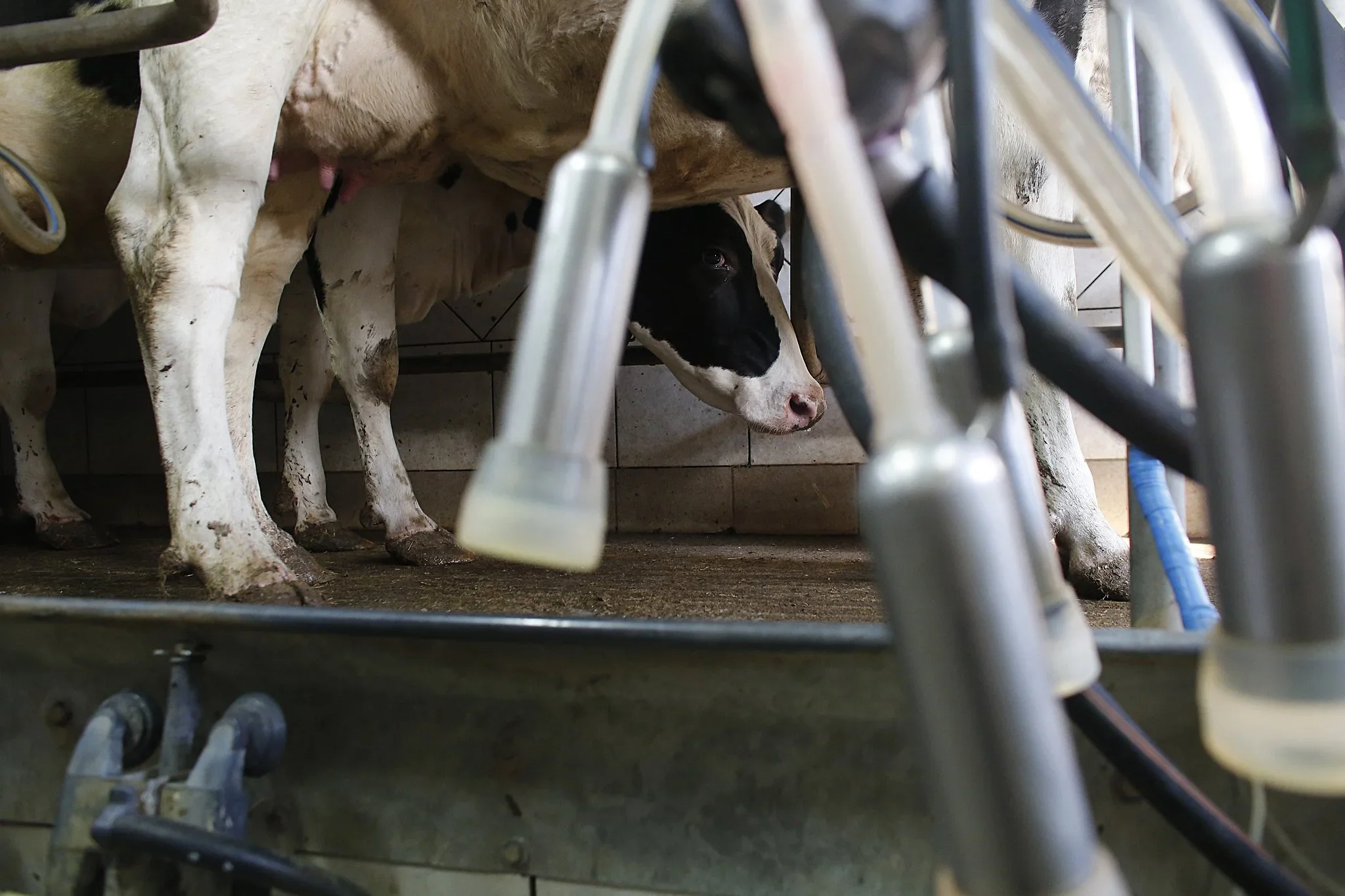
dairy industry