What Dairy Labels Actually Mean: 6 Claims Fact-Checked
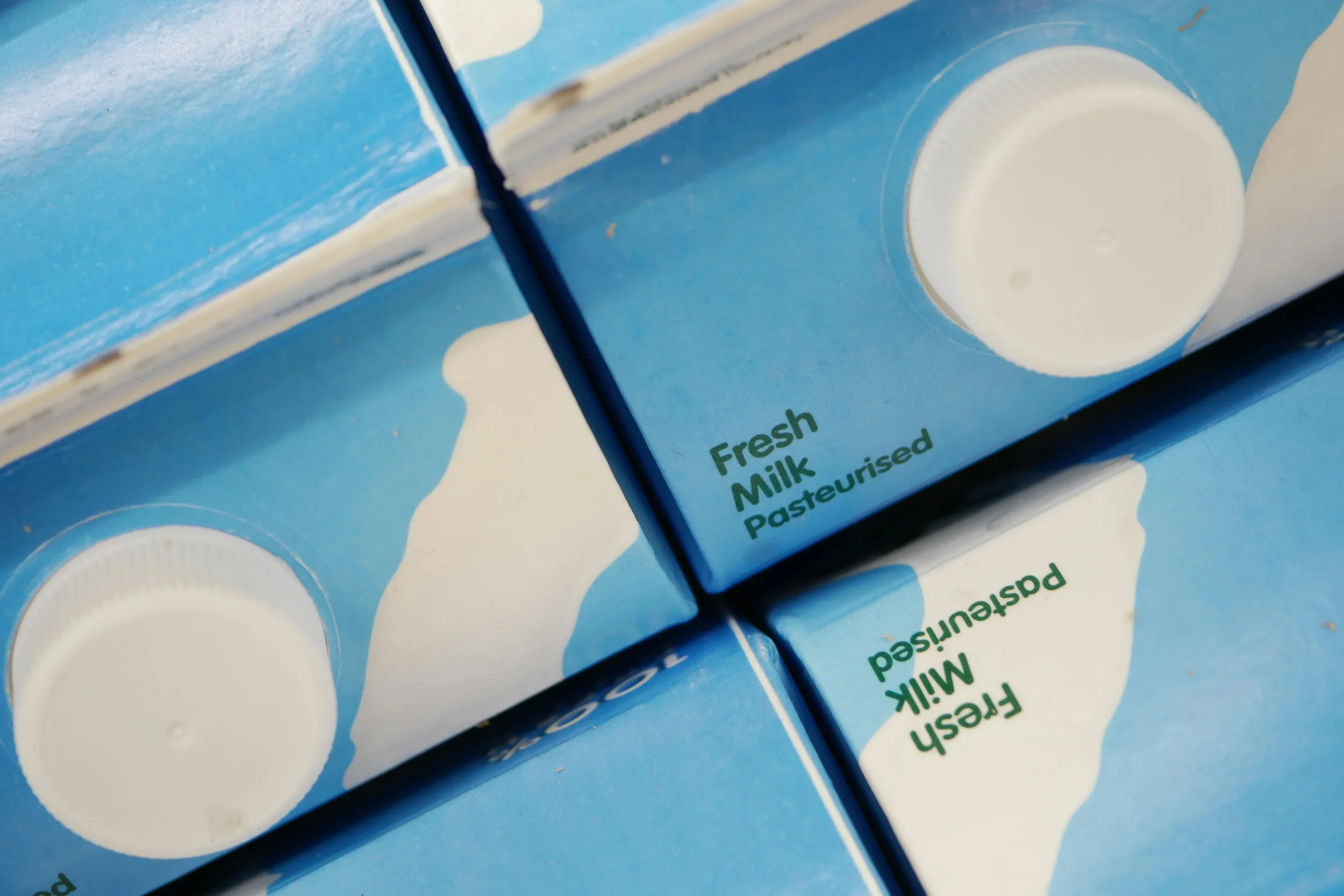
You read the label. You chose "organic." You paid more. You did everything right.
But the label was written by the same industry it's supposed to hold accountable. We took six of the most common claims on dairy packaging and checked each one against the peer-reviewed evidence. Here's what we found.
Contents:
"Farm Fresh"
"Certified Humane"
"USDA Organic"
"Builds Strong Bones"
"All-Natural"
"Sustainably Sourced"
What You Can Do
Sources
FAQ
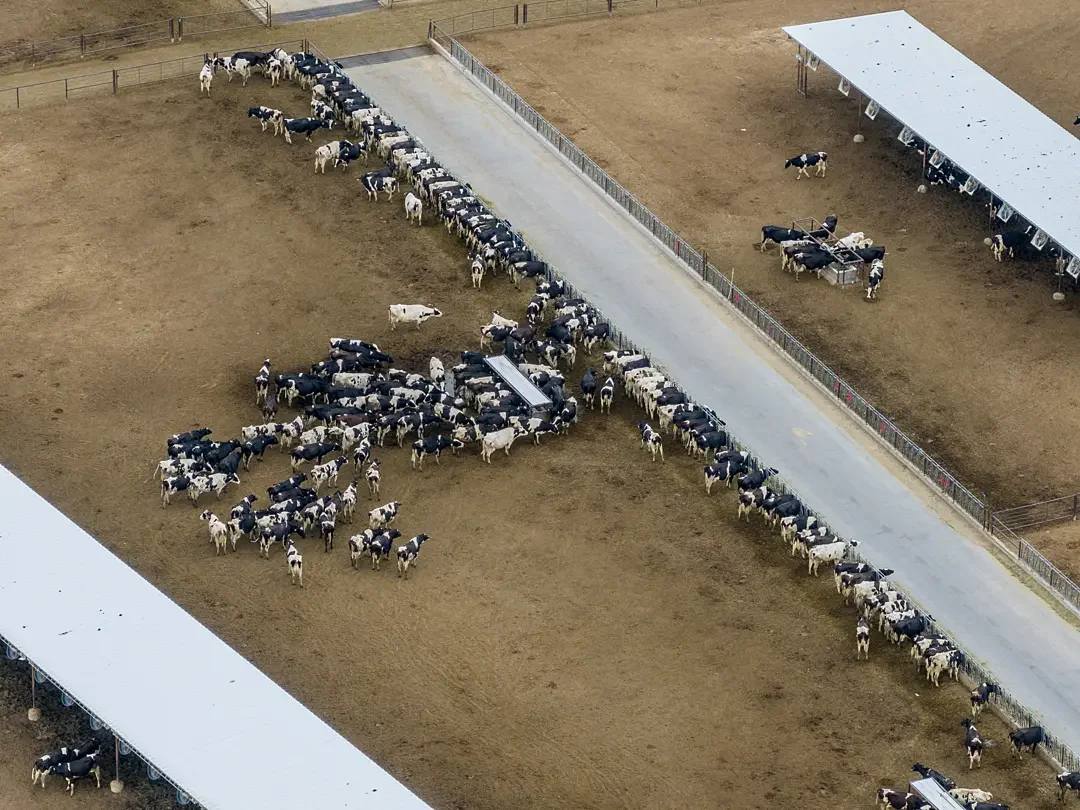
Cows on a large dairy farm in the desert eat and congregate around water troughs in a barren dirt enclosure. Citrus Valley Dairy, Gila Bend, Arizona, USA, 2023. Ram Daya / We Animals
1. "Farm Fresh" — What Does It Actually Mean?
Nothing. "Farm Fresh" has no legal definition under USDA or FDA regulations. Any dairy producer can print it on their packaging regardless of how or where the milk was produced.
The phrase evokes an image most consumers share: a small family farm, cows on green pasture, a red barn in the background. This image is reinforced by packaging design — pastoral illustrations, sunrise graphics, hand-drawn fonts.
The reality: 75% of U.S. cows live on operations with more than 1,000 animals, according to Sentience Institute's analysis of the USDA Census of Agriculture. The number of U.S. dairy herds dropped 63% between 2002 and 2022 as the industry consolidated into fewer, larger operations.
The industry frequently cites that 94% of dairy farms are family-owned. This is technically true, but "family-owned" describes the business structure, not the scale. A 5,000-cow confined feeding operation can be family-owned. The label "Farm Fresh" conflates ownership structure with farming practice. They are not the same thing.
What the label requires: Nothing. No certification. No inspection. No standard. What consumers believe it means: A small, traditional farm with cows on pasture. The gap between the two: Everything.
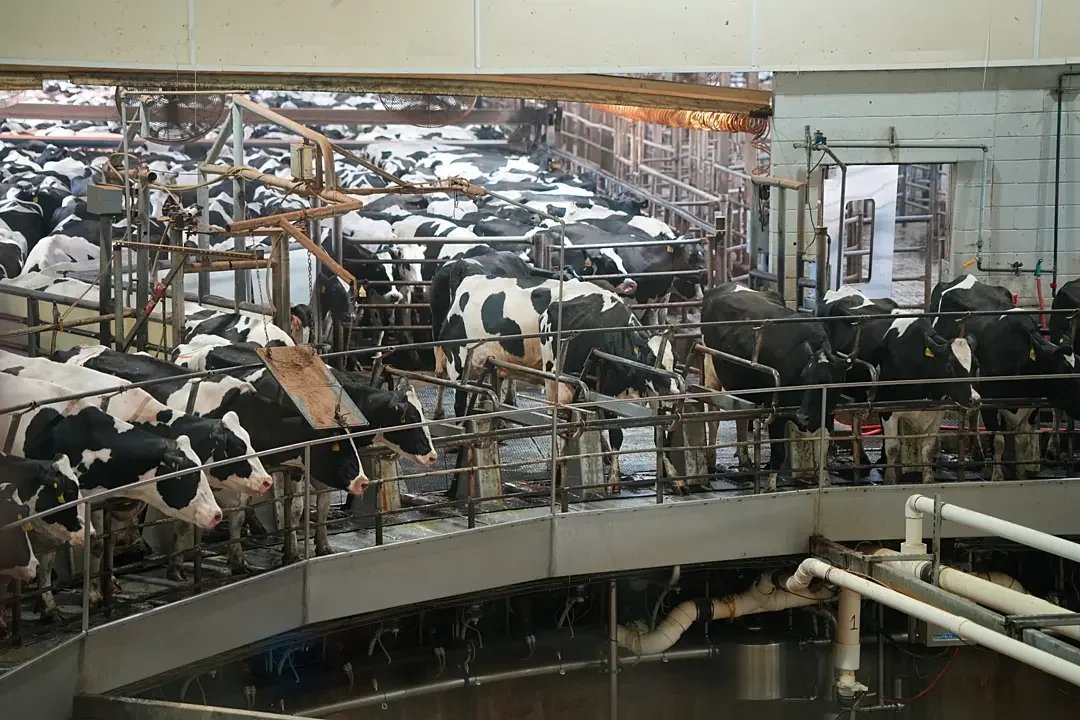
Holstein cows stand on a rotary milking parlour while being milked at a large dairy farm. The automated system milks multiple cows simultaneously as the platform rotates. Fair Oaks Farms, Fair Oaks, Indiana, USA, 2025. Crystal Heath / Our Honor / We Animals
2. "Certified Humane" — Does the Certification Protect Cows?
The "Certified Humane" label is administered by Humane Farm Animal Care (HFAC), a nonprofit that sets welfare standards above the legal minimum. It is a real certification with real audits. But what it requires and what consumers believe it requires are not the same.
HFAC's dairy cattle standards allow cows to be housed entirely indoors for their entire lives. Pasture access is not required. The certification prohibits tie-stalls, requires adequate space and bedding, bans growth hormones, and mandates access to water and appropriate feed. These are meaningful improvements over the legal baseline.
But the word "humane" in the name creates an expectation the standards don't fulfil. Most consumers who choose "Certified Humane" dairy believe the cows have outdoor access, are treated with compassion throughout their lives, and live in conditions most people would consider humane. Indoor-only confinement, machine milking 2–3 times daily, and routine calf separation within hours of birth are all permitted under the certification.
It's important to distinguish this from "American Humane Certified" — a different programme with weaker standards that has been described by welfare experts as much closer to industrial practices. The two are frequently confused, which the industry has little incentive to clarify.
What the label requires: Indoor housing permitted. No pasture required. No tie-stalls. Adequate space and bedding. What consumers believe it means: Humane treatment — pasture access, compassionate care, a good life. The gap: The name is the product.
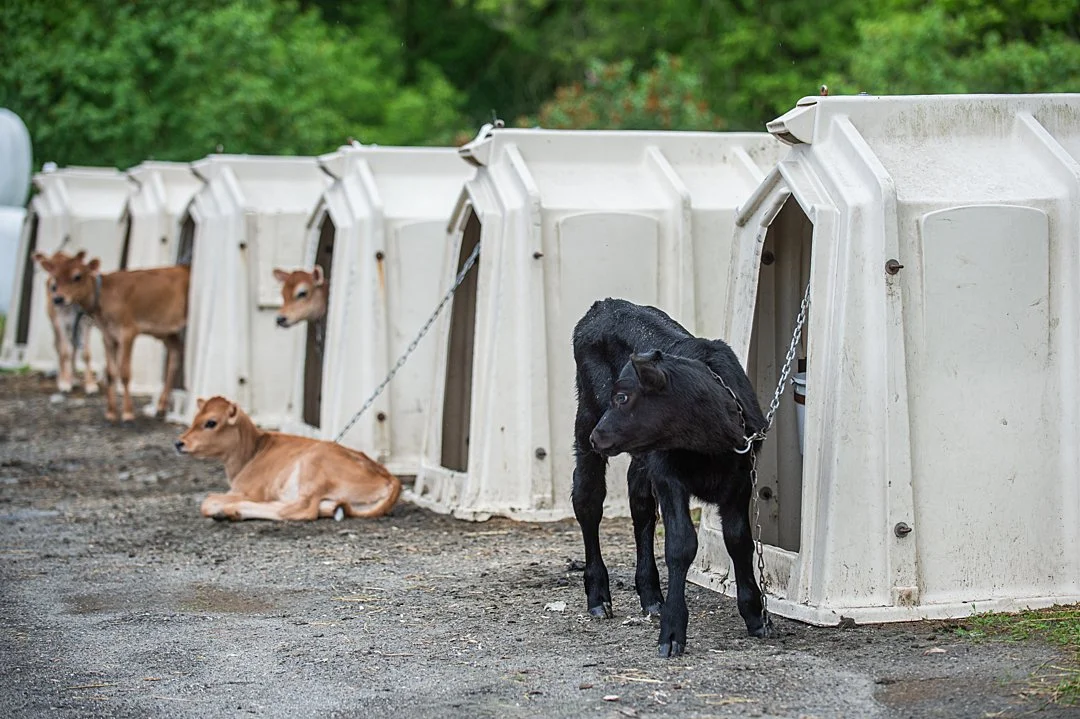
A row of emaciated calves chained to plastic hutches at a small, family-run organic dairy farm. Vermont, USA, 2022. Victoria de Martigny / We Animals
3."USDA Organic" — Does Organic Mean a Better Life for the Cow?
USDA Organic certification does include meaningful animal welfare requirements. Organic dairy cows must have access to pasture for at least 120 days per year, receive organic feed, and cannot be treated with antibiotics or growth hormones.
But the certification is silent on one of the most significant welfare events in a dairy cow's life: the separation of mother and calf.
USDA Organic standards do not specify when — or whether — a calf must remain with her mother. In practice, most organic dairy farms separate calves within hours of birth — the same timeline as conventional farms. A peer-reviewed comparison study published in the Journal of Dairy Science found that while organic farms are slightly more likely to delay separation than conventional farms, the majority still separate within 6–12 hours.
The premium price consumers pay for organic dairy — often 50–100% more than conventional — reflects an expectation that the animals live meaningfully better lives. On feed quality, hormone-free treatment, and pasture access, this is true. On the practice that causes the most acute welfare harm — the separation of a mother from her newborn — organic standards offer no protection.
What the label requires: 120 days pasture access. Organic feed. No hormones or antibiotics. Says nothing about calf separation. What consumers believe it means: A fundamentally better life, including for the calf. The gap: You paid more. She got the same separation.
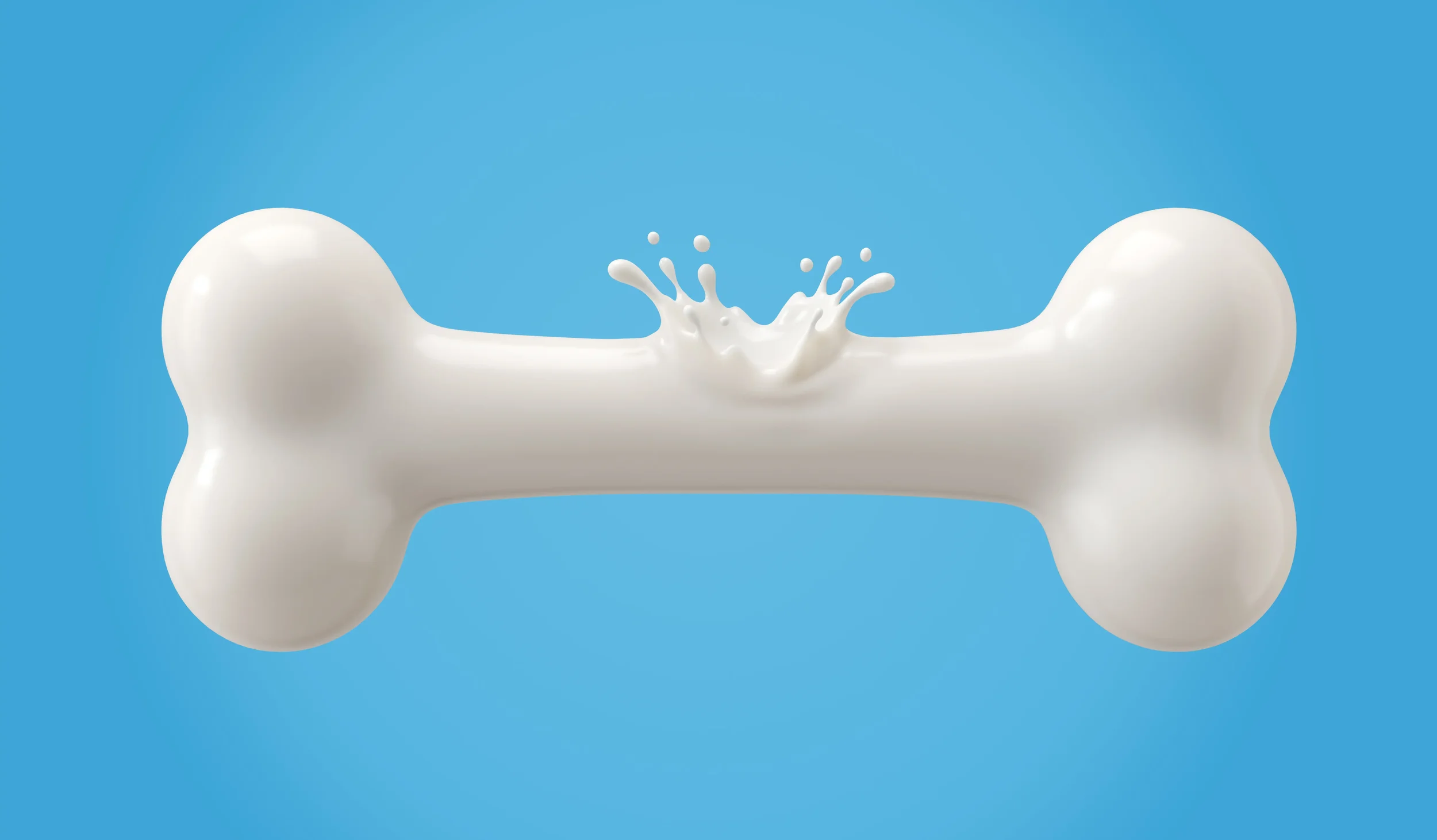
4."Builds Strong Bones" — Does the Science Support the Claim?
Bone health requires calcium, vitamin D, magnesium, protein, and weight-bearing exercise. The dairy industry has spent decades positioning milk as the essential source of these nutrients — particularly calcium.
But calcium is a nutrient, not a food group. And every nutrient dairy provides for bone health is available from plant-based sources: calcium-set tofu, fortified plant milks, low-oxalate leafy greens, chia seeds, legumes, and a vitamin D supplement.
The scientific evidence on dairy and fracture prevention is more complicated than the label implies. A 2018 systematic review and meta-analysis found no consistent association between milk consumption and reduced hip fracture risk. Some studies showed a protective effect. Others showed none. The relationship depends on overall diet quality, vitamin D status, physical activity, and dozens of other factors that a carton of milk cannot control.
Meanwhile, dairy consumed in childhood does not predict future bone health. It is possible to achieve normal growth and development throughout childhood without dairy, as long as the same nutrients are consumed through other sources.
The claim on the label is simple: dairy builds strong bones. The science is not simple. What IS simple: the nutrients your bones need don't have to come from a cow.
For the full evidence review — including the EPIC-Oxford fracture study, IGF-1 and growth concerns, and soy safety data — see our Health & Nutrition page.
What the label implies: Dairy is essential for strong bones. What the evidence shows: The nutrients that support bone health are available from plant sources. The link between dairy consumption and fracture prevention is inconsistent. The gap: The label sells dairy as the answer. The science says it's one option — and not a necessary one.
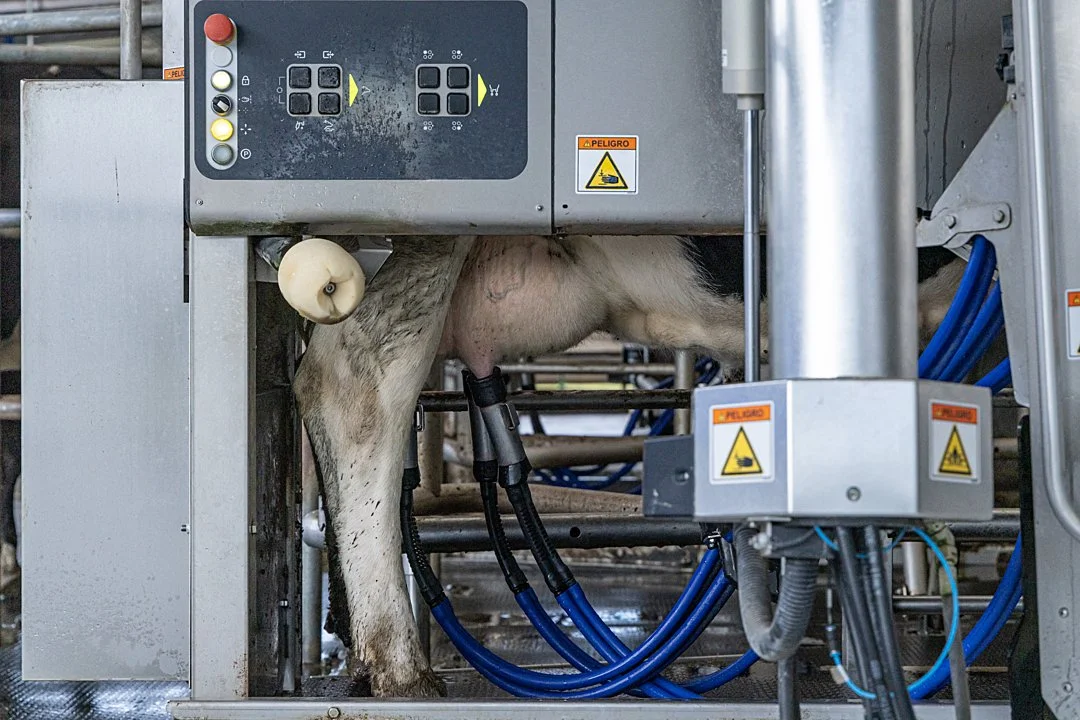
Teat cups collect milk from a dairy cow being milked by a robotic machine at a dairy farm, a technology that conditions the cows to be voluntarily milked by the system. Puerto Octay, Osorno Province, Los Lagos, Chile, 2023. Molly Condit / Sinergia Animal / We Animals
5."All-Natural" — What's Natural About Modern Dairy Production?
"All-Natural" is one of the most common claims on dairy packaging. Like "Farm Fresh," it carries no regulated definition when applied to dairy products. The USDA defines "natural" for meat and poultry (minimally processed, no artificial ingredients) but does not apply this standard to dairy labelling in the same way.
The term implies that dairy production is a natural process — cows naturally produce milk, which is naturally collected and naturally processed for human consumption.
But modern dairy production is an engineered system. Today's Holstein dairy cows produce roughly 5 times more milk than their calves would ever need. Average milk production per cow has tripled since the 1960s through intensive selective breeding focused entirely on yield, according to USDA NASS data.
This genetic intensification comes at a direct cost to the cow's body. Peer-reviewed research has documented that high milk yield is associated with increased rates of lameness, mastitis (udder infection), reproductive disorders, and metabolic disease. The cow's body is producing at a rate it was not evolved to sustain.
What the label implies: A natural product from a natural process. What the reality shows: Cows selectively bred to produce 5x what calves need. Bodies breaking down from engineered overproduction. The gap:There is nothing natural about designing a body to exceed its own limits.
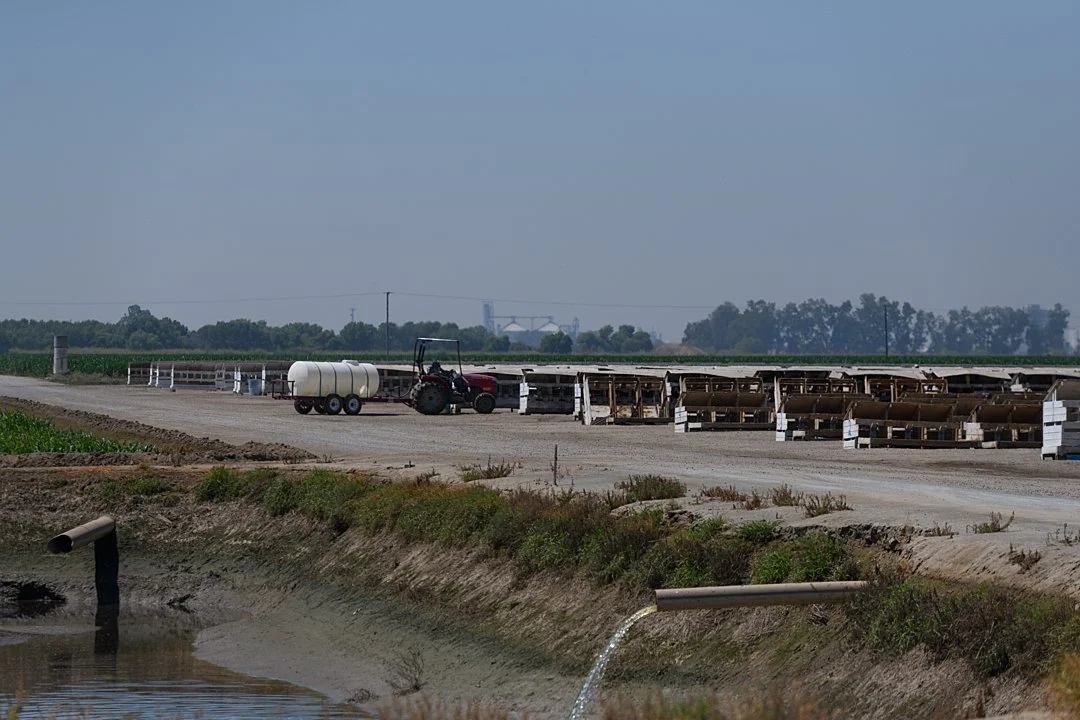
A California dairy farm’s waste infrastructure with a sewage pipe discharging runoff beside a large water tank, contaminating waterways and straining local water resources. Tulare County, California, USA, 2023. Aitor Garmendia / Animal Outlook / We Animals
6."Sustainably Sourced" — How Does Dairy's Environmental Footprint Compare?
Sustainability claims on dairy packaging have increased significantly in recent years. Terms like "sustainably sourced," "committed to a better planet," and "carbon-neutral by 2050" appear on packaging from major dairy brands.
The environmental data tells a different story.
The global dairy sector produces 4.0% of all human-caused greenhouse gas emissions, according to a 2023 life cycle assessment review. This figure includes methane from enteric fermentation (cow digestion), nitrous oxide from manure management, and CO₂ from feed production, land use, and transportation.
For comparison, global aviation produces approximately 2.5% of global CO₂ emissions, according to Our World in Data. The dairy comparison involves total greenhouse gas impact (including methane, which has a higher short-term warming potential), while the aviation figure typically counts CO₂ only — but even with this accounting difference, dairy's climate footprint is substantially larger.
Beyond emissions, dairy production is associated with significant water use (628 litres per litre of cow's milk), land use for feed crops, water pollution from manure runoff, and biodiversity loss from pasture expansion.
For the full evidence review see our Environment page.
What the label implies: This product is environmentally responsible. What the data shows: 4% of global greenhouse gas emissions. More than aviation. Significant water and land impact. The gap: The sustainability badge is aspirational marketing, not a reflection of current impact.
What You Can Do
Labels are designed to make your choice feel easy. The evidence suggests the choice is more complicated than the packaging implies.
Here's what you can do with that information:
Read beyond the front of the package. The marketing is on the front. The ingredients and certifications are on the back — and even those don't tell the full story.
Check the certification standards yourself. The ASPCA's Shop With Your Heart guide compares welfare certifications side by side. Know what each label actually requires before you pay a premium for it.
Consider the claims that aren't on the label at all. No dairy label mentions calf separation, the fate of male calves, the lifespan of the cow, or the slaughter that ends every dairy cow's life. The most significant welfare impacts are the ones the label never addresses.
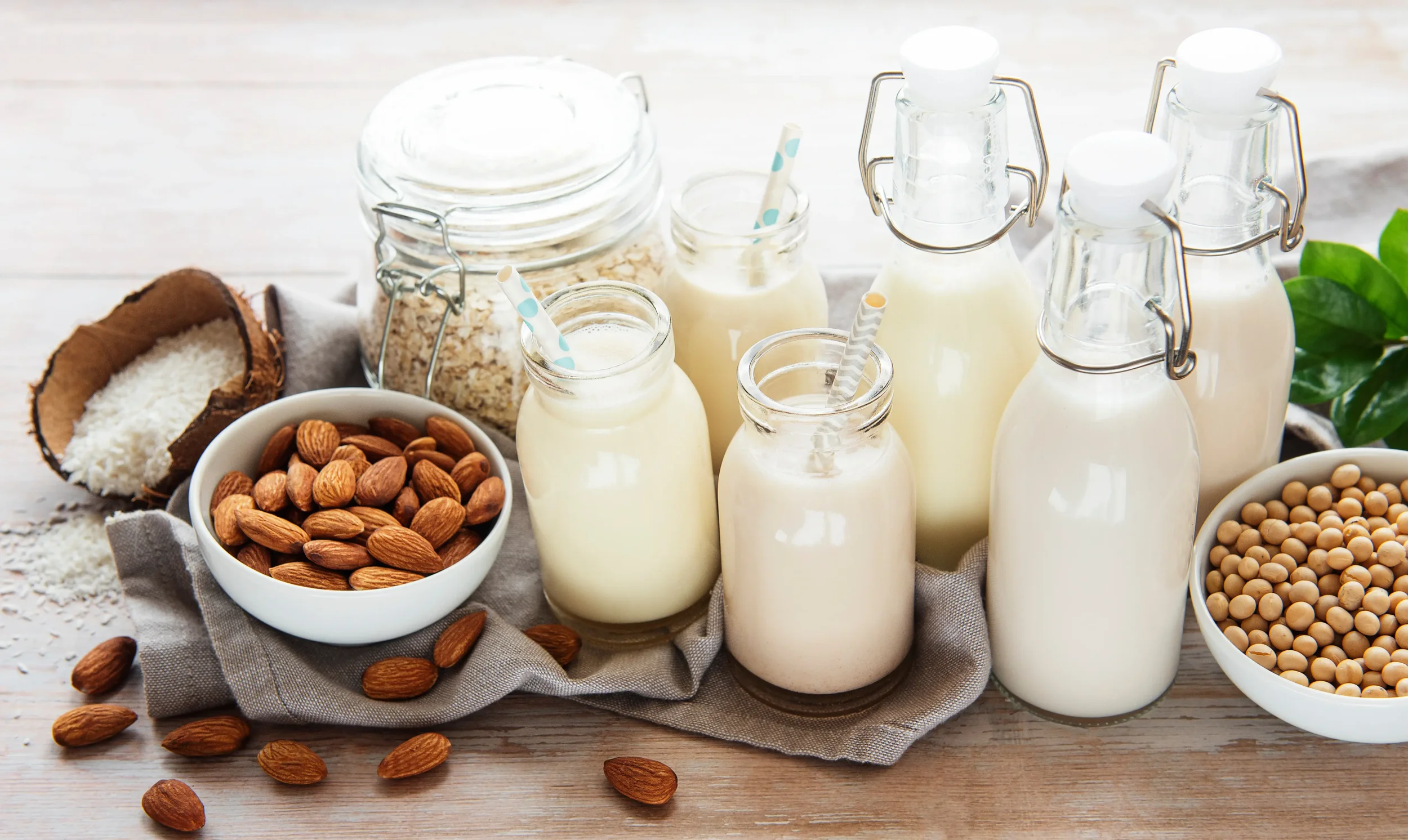
Try the alternatives. Oat milk, soy milk, almond milk, and coconut milk are widely available and require no cows, no calves, no separation, and no claims that need fact-checking. The switch is smaller than most people expect.
-
American Society for the Prevention of Cruelty to Animals (ASPCA). Shop With Your Heart. Guide comparing animal welfare certifications and food labels. https://www.aspca.org/shopwithyourheart
Animal Welfare Institute. AWI Food Label Guide. Guide explaining animal welfare labels and the standards behind them. https://awionline.org/wp-content/uploads/2025/10/awi-food-label-guide.pdf
Holstein Association USA. Holstein 101. Overview of Holstein dairy cows and breed traits, including milk production context. https://www.holsteinusa.com/holstein_breed/holstein101.html?tab=2#TabbedPanels1
Humane Farm Animal Care. Certified Humane. Homepage for the Certified Humane animal welfare certification program. https://certifiedhumane.org/
Humane Farm Animal Care. HFAC Dairy Cattle Standards. Dairy cattle standards used for Certified Humane certification. https://certifiedhumane.org/wp-content/uploads/HFAC-Dairy-Cattle-Standards_20-1.pdf
Our World in Data. CO2 Emissions from Aviation. Data explainer on aviation’s contribution to global carbon emissions. https://ourworldindata.org/co2-emissions-from-aviation
Sentience Institute. U.S. Factory Farming Estimates. Analysis of U.S. animal agriculture by farm size and production system. https://www.sentienceinstitute.org/us-factory-farming-estimates
U.S. Department of Agriculture, Agricultural Marketing Service. Organic Livestock Requirements. Official USDA summary of organic livestock standards, including pasture requirements. https://www.ams.usda.gov/sites/default/files/media/Organic%20Livestock%20Requirements.pdf
U.S. Department of Agriculture, Economic Research Service. Fewer Farms, More Milk: The Changing Structure and Costs of U.S. Dairy Farming. Article on consolidation in the U.S. dairy sector. https://www.ers.usda.gov/amber-waves/2026/february/fewer-farms-more-milk-the-changing-structure-and-costs-of-us-dairy-farming
U.S. Department of Agriculture, Food Safety and Inspection Service. FSIS. USDA resource for labeling and inspection information for meat and poultry products. https://www.fsis.usda.gov/
U.S. Dairy. About Us / DMI. Industry page describing dairy promotion and farm ownership claims. https://www.usdairy.com/about-us/dmi
van den Hoek, A. / Water Footprint Network. The Water Footprint of Meat and Dairy. Report on water use associated with animal products, including dairy. https://www.waterfootprint.org/resources/Hoekstra-2012-Water-Meat-Dairy_1.pdf
Peer-reviewed study. Comparison of organic and conventional dairy farms on calf separation practices. Journal of Dairy Science article examining separation timing and management differences. https://www.journalofdairyscience.org/article/S0022-0302(17)30769-5/fulltext
Peer-reviewed study. High milk yield and dairy cow health. Review discussing links between milk yield, lameness, mastitis, reproductive disorders, and metabolic disease. https://pmc.ncbi.nlm.nih.gov/articles/PMC8281100/
Peer-reviewed review article. Global dairy sector greenhouse gas emissions. Life cycle assessment review estimating dairy’s contribution to human-caused greenhouse gas emissions. https://link.springer.com/article/10.1007/s11250-023-03748-4
Peer-reviewed review article. Milk consumption and fracture risk. Review of the evidence on milk, bone health, and fracture outcomes. https://www.nejm.org/doi/full/10.1056/NEJMra1903547
FAQ
Is "Farm Fresh" dairy regulated? No. "Farm Fresh" has no legal definition under USDA or FDA regulations. Any dairy producer can use the term regardless of farming practices or facility size.
Does "Certified Humane" mean cows have pasture access? No. Humane Farm Animal Care (HFAC) standards for dairy cattle allow cows to be housed entirely indoors for their entire lives. Pasture access is not required under the Certified Humane label.
Are organic dairy calves separated from their mothers? Yes, in most cases. USDA Organic standards do not specify when or whether calves must remain with their mothers. Peer-reviewed research shows that most organic dairy farms separate calves within 6–12 hours of birth.
Does dairy prevent fractures and build strong bones? Bone health requires calcium, vitamin D, magnesium, protein, and exercise. All of these nutrients are available from plant-based sources. A 2018 meta-analysis found no consistent association between milk consumption and reduced hip fracture risk. The dairy industry positions milk as essential for bones, but the evidence shows it's one source of the right nutrients — not the only one, and not a necessary one.
How much milk do modern dairy cows produce compared to natural levels? Modern Holstein dairy cows produce approximately 5 times more milk than their calves would need. Average production per cow has tripled since the 1960s through selective breeding focused on yield.
Is dairy more polluting than flying? The global dairy sector produces approximately 4% of all human-caused greenhouse gas emissions, compared to approximately 2.5% for aviation. The dairy figure includes methane and nitrous oxide; the aviation figure typically counts CO₂ only. Both are significant contributors to climate change.
What's the most misleading dairy label? "Farm Fresh" and "All-Natural" are arguably the most misleading because they have no regulated definition at all. Any dairy producer can use them without meeting any standard. However, "Certified Humane" and "USDA Organic" can also be misleading because consumers assume they guarantee practices (like pasture access or keeping calves with mothers) that the certifications don't actually require.
What are the best dairy alternatives? Soy milk is closest to cow's milk in protein content. Oat milk is the most popular for coffee and cooking. Almond and coconut milks are lower in calories and protein but widely available. All are produced without calf separation, slaughter, or the environmental footprint of dairy production.