
Motherhood in Dairy
Photo credits: human.cruelties
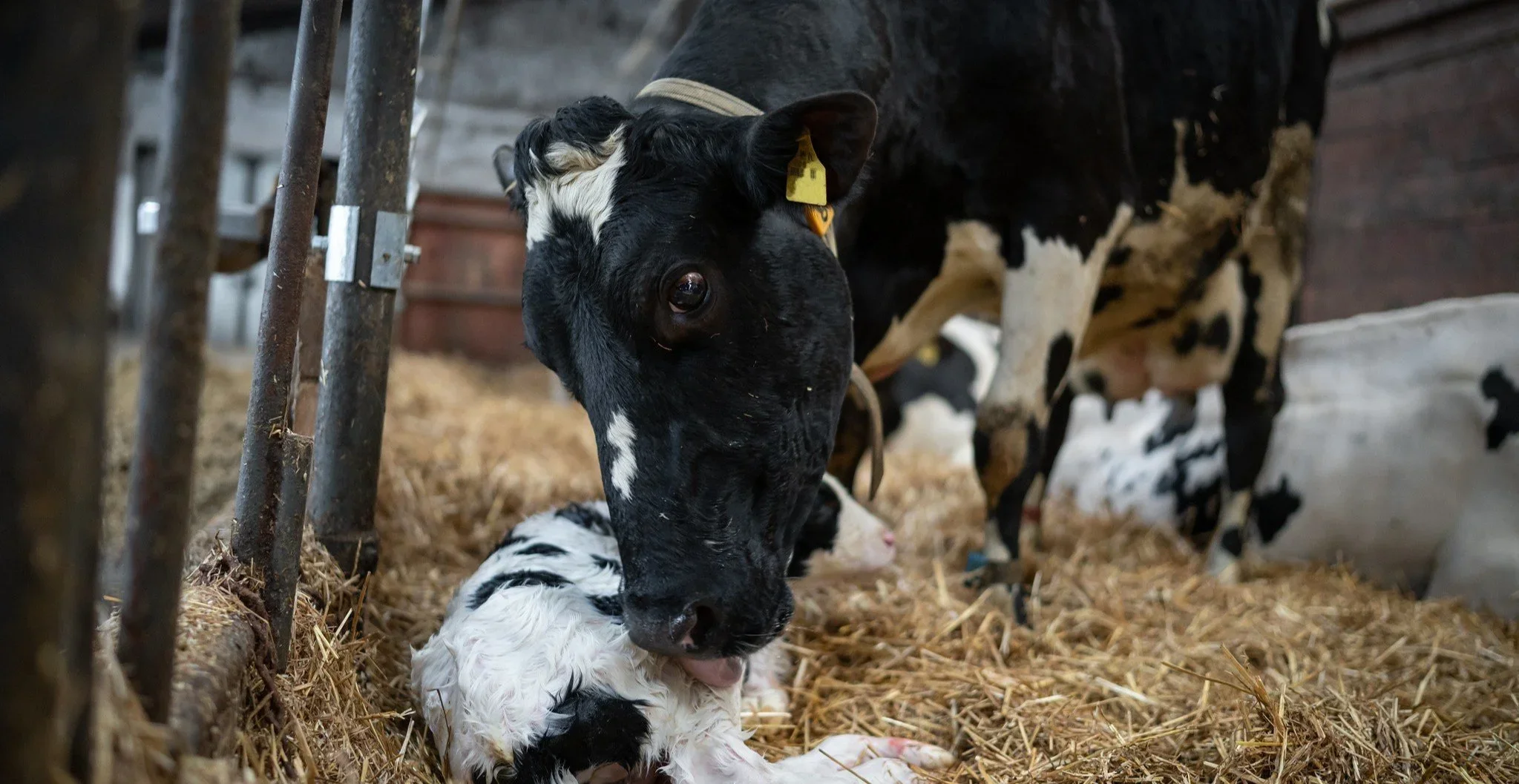
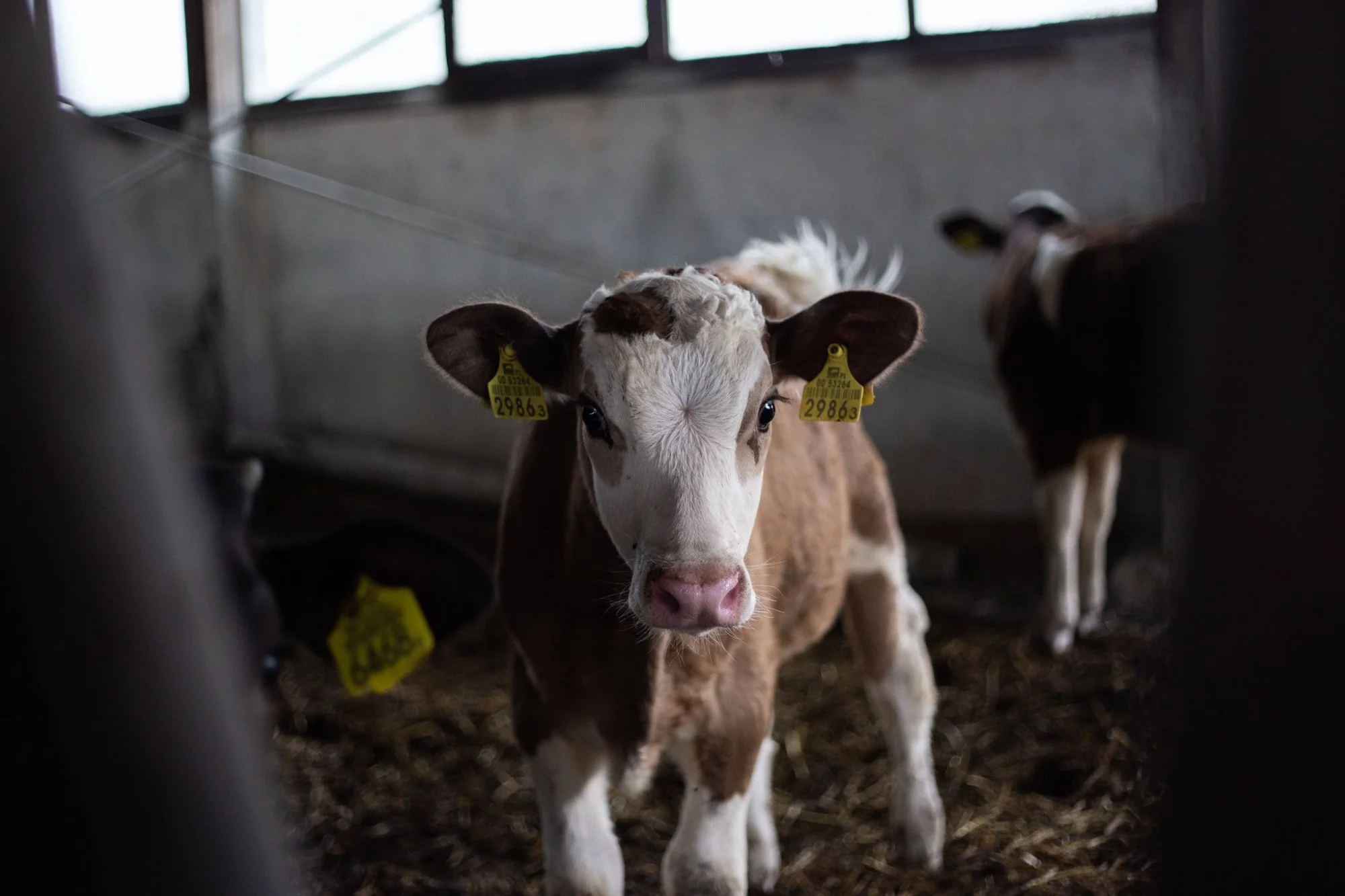
A cow only makes milk after she gives birth, just like a human. To sell that milk, the dairy industry takes her calf. Usually within a day. Then it happens again the next year.
Contents:
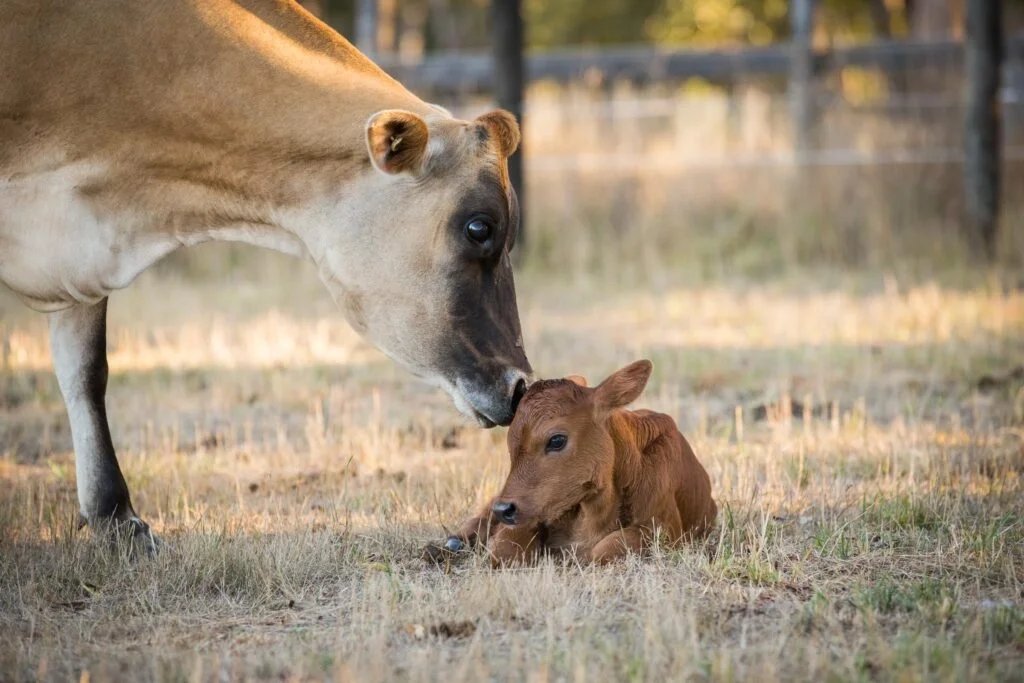
At eight years old, Clarabelle's milk production dropped. So the dairy farm sent her to slaughter. Cows can live to around 20.
She was hours from being killed when Edgar's Mission, a sanctuary in Australia, rescued her. When she arrived, staff found out she was pregnant.
On the farm, every calf she ever had was taken from her shortly after birth.
Her new calf wasn't due for another week. Then one morning, she was late for breakfast. Clarabelle was never late. She was always waiting at the gate. Now she kept her distance and glanced behind her. And one of her teats was full of milk.
She had something to hide.
Staff went looking. In a stand of tall grass, they found a tiny calf, several days old. Clarabelle had given birth in secret and hidden her baby. [6]
As Edgar's Mission put it: "She was determined this one would be 'hers'."
Every glass of milk comes from a mother like Clarabelle.
Most of them never get to keep a calf.
How Quickly Does a Cow Bond With Her Calf?
A mother cow bonds with her calf in about five minutes.
Not five hours. Not five days. Five minutes.
Research published in Frontiers in Veterinary Science documents how this happens. [1] The moment a calf is born, the mother's brain floods with oxytocin, the same hormone that bonds human mothers to their babies. She starts licking the calf immediately. The licking clears the calf's airways, dries the coat to prevent heat loss, and gets the calf standing and nursing.
In those first minutes, she learns her calf's scent, appearance and voice. She's not bonding with "a calf." She's bonding with this calf.
Once that bond forms, it doesn't go away.
The industry says taking the calf early "prevents bonding and therefore prevents stress." That's backwards. The bond is already there within minutes. Taking the calf doesn't prevent stress. It creates it.
What Happens When a Calf Is Taken From Her Mother?
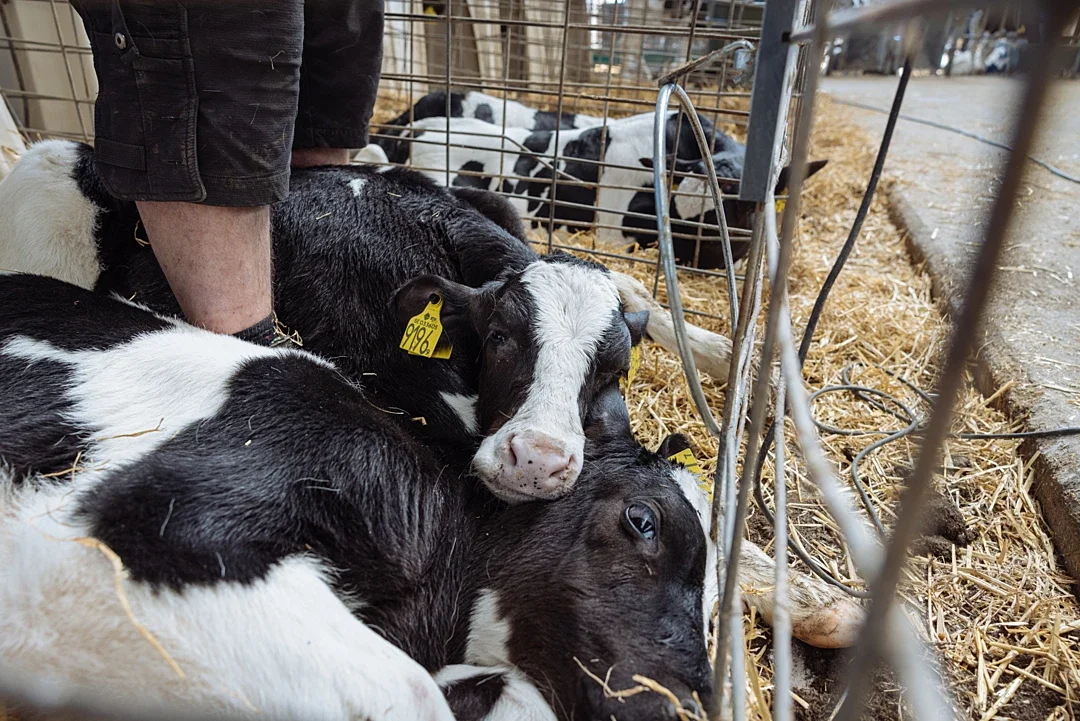
When a calf is taken from her mother, both of them show measurable, documented distress.
Studies show mothers keep searching and calling for their calves for days, sometimes weeks. [2] Their calls are measurably different from other vocalisations. These aren't generic moos. They're the sound of a mother looking for her missing child.
Clarabell calling for her calf, Valentine.
The mother's response:
Intense calling that can last for days
Searching (pacing, checking doorways, looking for the calf)
Elevated cortisol, the main stress hormone
Disrupted milk letdown (stress interferes with oxytocin)
Higher risk of mastitis and re-productive infections in the weeks that follow
The calf's response:
High-pitched distress calls that can continue for a week
Searching for the mother
Eating less right after separation
Elevated cortisol and a weaker immune system
Behavioural changes that can last into adulthood
A 2019 review in the Journal of Dairy Science examined decades of research on cow-calf separation. [3] It found no health-based evidence that early separation is necessary. The practice continues because it pays, not because it's better for the animals.
The timing changes everything. Calves who stay with their mothers for 8 to 12 weeks and are weaned gradually show minimal stress. Their cortisol barely rises. Their calling fades within a day or two. They keep eating normally.
Calves taken at 24 hours show severe, prolonged stress.
The calf was always going to be taken. The industry chose the cruelest time to do it.
A Telling Development
Some farms in Europe now use cow-calf contact systems, keeping mothers and calves together for weeks or months instead of hours. [4]
Why? Because the research became impossible to ignore. These systems still involve forced pregnancy, eventual separation and slaughter. They're not ethical dairy. But their existence proves something:
The industry knows taking calves at birth harms both mother and calf. It does it anyway.
Why Does the Dairy Industry Take Calves Away?
The answer is milk.
60 to 90 days: peak milk production
1 to 2 gallons: what a calf drinks per day
$100 to $300: what a male dairy calf may sell for
A cow makes the most milk in the first 60 to 90 days after giving birth. That's peak lactation, when her body is working hardest to feed her calf. A nursing calf would drink roughly one to two gallons a day.
Over the 8 to 11 months a calf would naturally nurse, that adds up to hundreds of gallons. Historically, a newborn male dairy calf has sold for $100 to $300—sometimes less. [5] The milk is worth more than the calf. So the calf goes.
The numbers vary by country and milk prices. The logic doesn't. Every calf left with his mother is milk that can't be sold.
That calculation treats the calf as a cost. It treats milk as a product. But the milk was made for him.
Are Cows Bad Mothers?
No. The dairy industry has long claimed that cows bred for high milk production aren't naturally maternal. The evidence says the opposite.
For decades, the industry has told a simple story. Cows don't really need their calves, they might even endanger them. Early separation is better for everyone. As proof, it points to what happens on commercial farms: cows who seem indifferent to their calves, cows who nurse the wrong calf, cows who seem restless and anxious around birth.
These behaviours don't show a lack of maternal instinct. They show an environment that won't let a mother be one.
Consider a typical dairy calving area:
Many pregnant cows in a crowded space
No privacy for giving birth
The smell of other cows' births everywhere, making it hard to tell which calf is hers
No way to move away from the herd before giving birth
Constant human disturbance
Research on feral and sanctuary cattle shows that when cows have space, privacy and freedom from interference, they are capable mothers. [6] They move away from the herd before giving birth. They bond immediately. They nurse successfully. They protect their young. They stay close to their calves even after weaning.
Some mothers show it even on the farm. Dr. Holly Cheever, a veterinarian who worked with dairy herds, has described a cow who gave birth to twins. She brought one calf in to the farmer and kept the other hidden in the pasture. The farmer only found the second calf when he noticed her milk was down. He took that one too. [8]
The "bad mother" story doesn't describe cows. It describes the barn.
Clarabelle isn't unusual. Given time and safety, cows show what the industry denies. They are devoted mothers.
They form lasting bonds with their calves. They grieve when separated. They teach, protect and nurture. They do what mothers of any species do when given the chance.
Why This Matters
Clarabelle got to keep Valentine. Most cows used for dairy never keep a single calf.
It doesn't happen once. Cows in dairy are kept in a continuous cycle of pregnancy and milking. Every year, a new pregnancy. Every year, a new calf. Every year, the calf is taken.
By four to six years old, after four to six births, her body is worn out. She's slaughtered for low-grade beef. Her natural lifespan is around 20 years. She gets a quarter of that.
Back at Edgar's Mission, Clarabelle's story ended differently this time.
Staff found her calf on Valentine's Day 2015. She was a girl, so they named her Valentine, in honour of the love between mother cows and their babies.
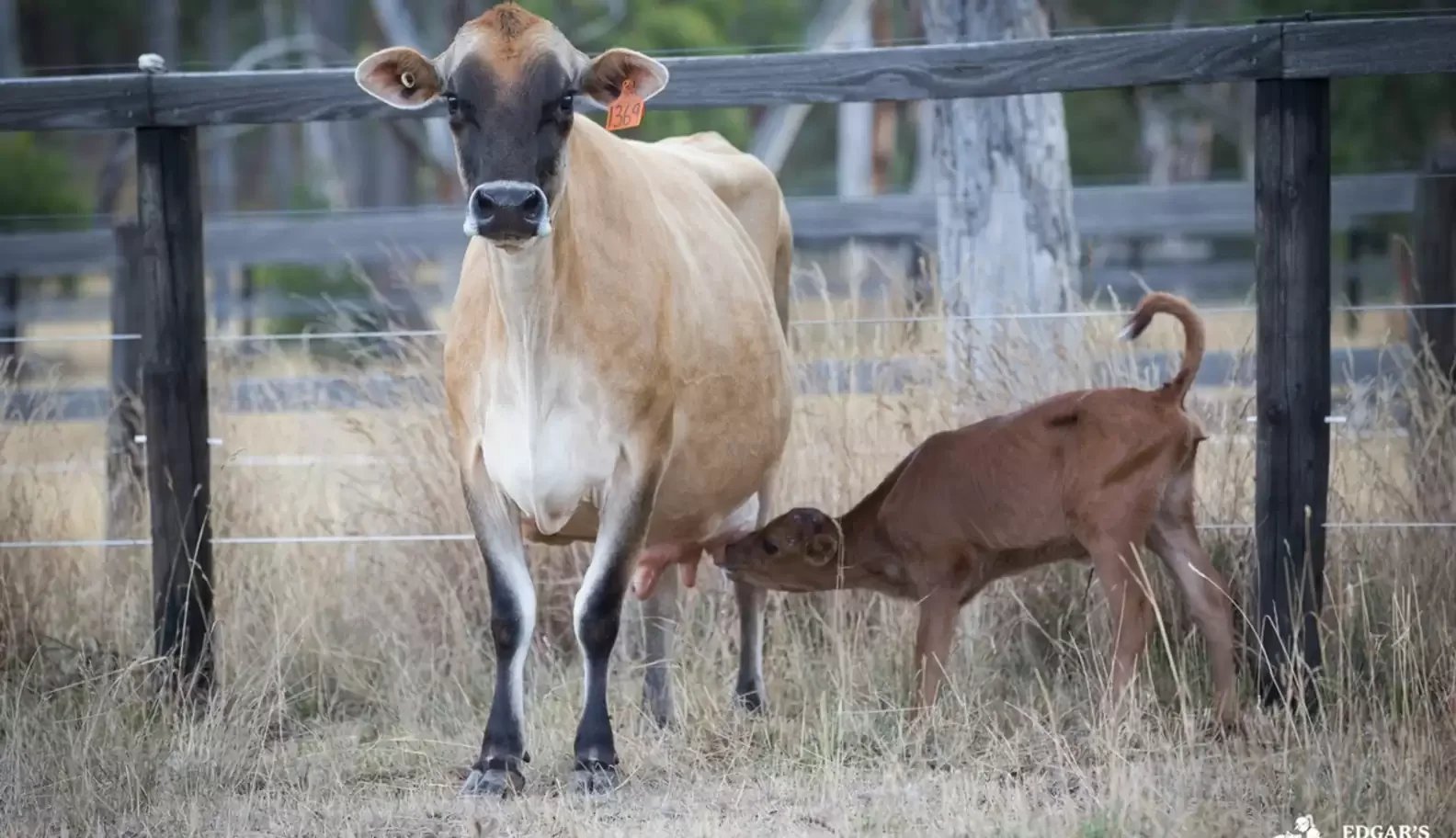
No one would ever take her away. Valentine was the one baby Clarabelle got to keep.
Years later, Clarabelle can still be seen grooming her daughter. Edgar's Mission says their bond is stronger than ever. [7]
What Happens When a Cow Gets to Keep Her Calf?
The bond is real. Taking her calf breaks it.
And every carton of milk depends on that happening.
What You Can Do
Every time you choose plant-based milk, one less calf has to be taken for it.
1. Try plant-based milks
Soy milk is the closest match to dairy for protein. Oat milk is the favourite for coffee. Most plant milks are fortified with calcium and vitamins, so check the label. Most coffee shops offer them as standard, and many people end up preferring the taste.
Find your dairy-free swap4. Share what you've learned
Most people don't know a cow has to lose her calf to make milk. Share this page. Clarabelle's story will do the rest.
sign up to our newsletter2. Learn more about dairy
See what happens to the calves after they're taken, and what a dairy farm actually looks like inside.
What happens to the calves3. Support animal sanctuaries
Edgar's Mission, Poplar Spring Animal Sanctuary, Farm Sanctuary and local rescues care for cows rescued from dairy farms. Donations fund their care for the rest of their lives.
Meet Clarabelle and ValentineThe milk was made for her calf. It still is.
Frequently Asked Questions
Does a cow have to be pregnant to make milk?
Yes. Like all mammals, a cow only makes milk after giving birth. To keep the milk coming, cows used for dairy are made pregnant again roughly once a year.
When are calves taken from their mothers on dairy farms?
Usually within 24 hours of birth. Some farms take them within hours.
Do cows miss their calves?
Yes. Mother cows bond with their calves within about five minutes of birth. After separation, mothers and calves call and search for each other for days, and both show raised stress hormones.
Is there dairy where calves stay with their mothers?
Some European farms keep mothers and calves together for weeks or months. These systems still involve repeated pregnancy, eventual separation and slaughter.
What happens to cows used for dairy when they stop producing enough milk?
They're slaughtered, usually at four to six years old, and sold as low-grade beef. Their natural lifespan is around 20 years.
-
[1] Orihuela, A., Huitrón-Bravo, G., & Flores-Peinado, S. C. (2021). Dairy-specific maternal bonding in cattle. Applied Animal Behaviour Science, 235, 105198. https://doi.org/10.1016/j.applanim.2020.105198
[2] Marchant-Forde, J. N., Marchant-Forde, R. M., & Weary, D. M. (2002). Responses of dairy cows and calves to each other's vocalizations after separation. Applied Animal Behaviour Science, 78(1), 19-28. https://doi.org/10.1016/S0168-1591(02)00082-5
[3] Beaver, A., Meagher, R. K., von Keyserlingk, M. A. G., & Weary, D. M. (2019). A systematic review of the effects of early separation on dairy cow and calf health. Journal of Dairy Science, 102(7), 5784-5810. https://doi.org/10.3168/jds.2018-15603
[4] Bertelsen, M., Jensen, M. B., & Larsen, T. (2023). Shaping cow-calf contact systems: Farmers' motivations and considerations behind a range of different cow-calf contact systems. Journal of Dairy Science, 106(11), 7769-7785. https://doi.org/10.3168/jds.2022-23148
[5] USDA. National Dairy Comprehensive Report - Monthly
https://mymarketnews.ams.usda.gov/filerepo/sites/default/files/2957/2026-09-03/1349043/ams_2957_00081.pdf[6] Rørvang, M. V., Nielsen, B. L., Herskin, M. S., & Jensen, M. B. (2018). Prepartum maternal behavior of domesticated cattle: A comparison with managed, feral, and wild ungulates. Frontiers in Veterinary Science, 5, 45. https://doi.org/10.3389/fvets.2018.00045
[7] Edgar's Mission. (2015). Mother Cow Was Rescued From Farm Just In Time To Have Her Baby. The Dodo. https://www.thedodo.com/dairy-cow-calf-baby-rescue-1010627123.html
[8] Holly Cheever, D.V.M. (2012). National Conference to End Factory Farming https://www.youtube.com/watch?v=q-031z5U5hw&t=326s
Further Reading
dairy industry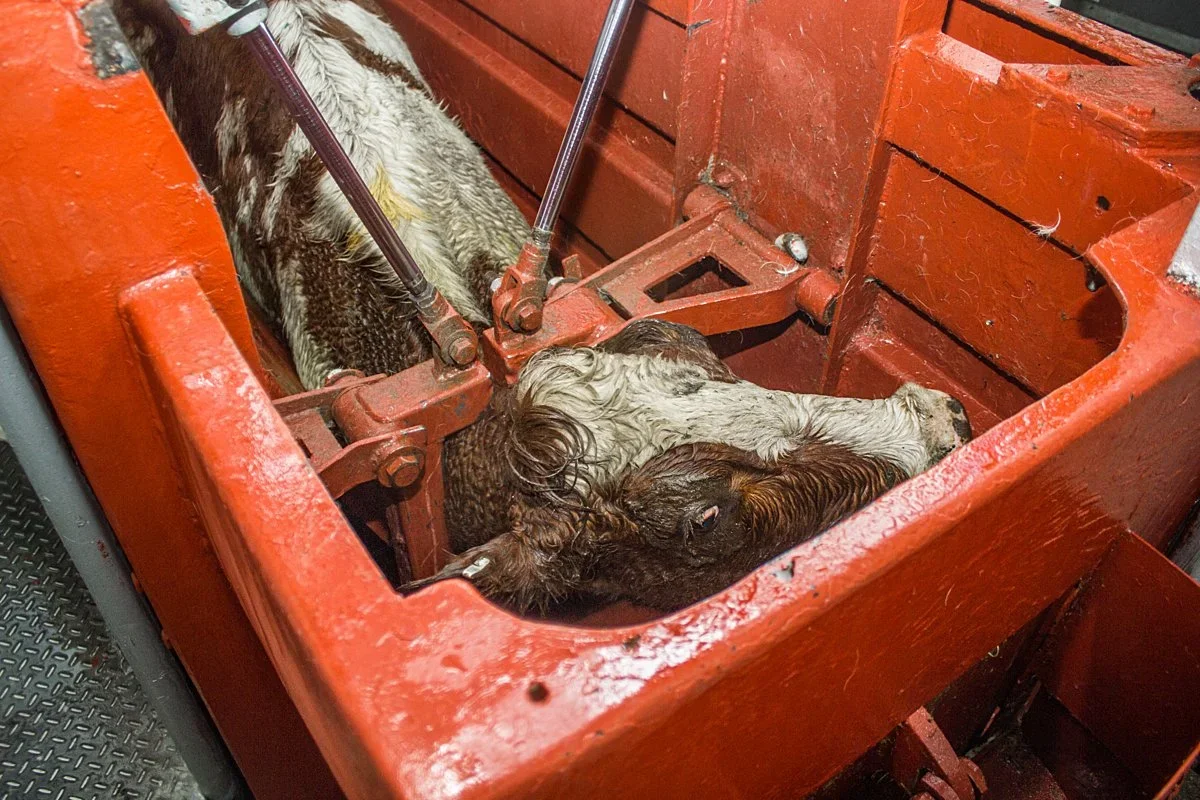
dairy industry
environment